


The first cold evening of autumn arrives, you put the heating on for the first time in months and the radiators stay cold. It’s a common story. After a long summer off, heating systems can be slow to wake up, and small problems show up all at once. Many are easy to sort, such as low pressure or air in the radiators. If it’s something more, our Gas Safe engineers carry out boiler servicing and repairs in Johnstone, Elderslie and across Renfrewshire.
Why boilers play up after summer
Over summer, the heating side of your system often sits unused for months. Your boiler may still have been heating hot water, but the pump, valves and radiators haven’t been working. That can lead to:
- Sticking parts: pumps and valves can seize when they haven’t moved for a while
- Air in the system: air collects at the top of radiators, stopping them heating properly
- Low pressure: pressure can drop slowly over the summer without anyone noticing
- Thermostat and timer settings: settings get changed, batteries go flat and clocks drift
Checks you can safely make
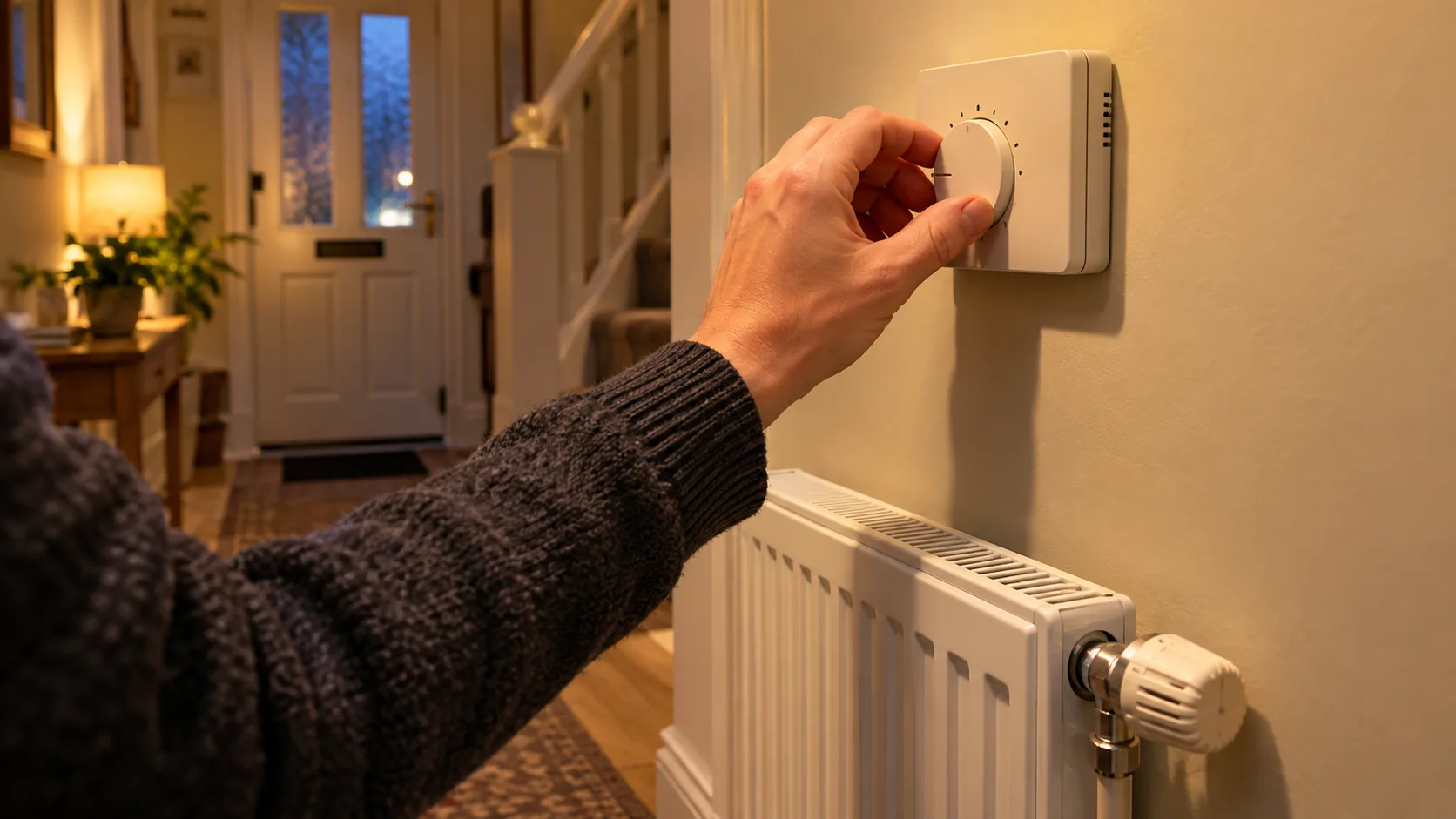
Check the timer and thermostat
Make sure the heating is set to on, or set to come on now, and turn the thermostat up above the current room temperature. If the thermostat uses batteries, fit fresh ones.
Look at the pressure gauge
Many combi and system boilers should read around 1 to 1.5 bar when cold. Check your manual for your model. If it’s low, the manual explains how to top it up. If it keeps dropping, there may be a leak that needs an engineer.
Bleed the radiators
If radiators are warm at the bottom but cold at the top, there’s air trapped inside. With the heating off and the radiators cool, open the bleed valve with a radiator key until water appears, then close it. Check the pressure again afterwards, as bleeding can lower it.
Open any closed radiator valves
Thermostatic radiator valves (TRVs) can stick in the closed position over the summer. Turn each one from low to high a few times.
Note any fault code and reset once
If the boiler shows a fault code, write it down and check the manual. You can try the reset button once. If it locks out again, call an engineer.
Signs you need an engineer
Whether you’re in Renfrew or anywhere nearby, these are the signs it’s time to call an engineer:
- The boiler fires up but the radiators stay cold, which can point to a seized pump or a stuck valve
- You hear banging, humming or gurgling that wasn’t there before
- The pressure keeps dropping after you’ve topped it up
- Water is leaking from the boiler or pipework
- The boiler keeps locking out
Never remove the boiler casing. If you smell gas, turn off the supply at the meter if it’s safe, open windows and call the National Gas Emergency Service on 0800 111 999.
Getting ready for winter in Renfrewshire
The best time to find out your heating has a problem is a mild autumn day, not the first frost. Across Paisley, Erskine and Elderslie, autumn is when engineers get busiest, so testing your heating early gives you time to get any faults fixed. An annual service also checks the boiler is working safely and efficiently before winter, and most manufacturers require one to keep the warranty valid. If your boiler is old and the faults keep coming, our new boiler options in Paisley explain the next step.
Frequently asked questions
Why won’t my heating come on after summer?
The most common reasons are the timer or thermostat not calling for heat, low boiler pressure, air in the radiators or a pump or valve that’s stuck after months of not moving. Check the controls and pressure first. If the boiler runs but the radiators stay cold, call an engineer.
Why is my radiator cold at the top?
Air collects at the top of radiators, especially after the heating has been off for a while. Bleeding the radiator lets the air out so hot water can fill it. If it’s cold at the bottom instead, sludge is a more likely cause, which needs an engineer to look at.
Should I run my heating in summer?
Some engineers suggest running the heating briefly every few weeks over summer to keep the pump and valves moving. It’s a simple way to reduce the chance of parts sticking. Testing the heating in early autumn, before you really need it, also gives you time to sort any problems.
When should I have my boiler serviced?
Once a year is the usual recommendation, and most manufacturers require it for the warranty. Late summer and early autumn are a good time, as any problems are found before winter. If your service is due, it’s worth booking early, as engineers get busier when the weather turns.
Heating still not working?
If you’ve made the simple checks and your heating still won’t come on, give us a call on 07715 980674 or drop us a message and we’ll come out and get it working again.