


It’s one of the most common heating questions we’re asked once the nights draw in. For most homes with a gas boiler, the answer is no: heating the house when you need it, on a timer, uses less gas than leaving it running on low all day. There are exceptions, such as very well insulated homes, heat pumps and homes that struggle with damp. Here’s how to decide, and how to set your controls, wherever you are in Paisley or the rest of Renfrewshire. Our central heating page covers the systems we work on.
Why the timer usually wins
A house loses heat all the time, and it loses it faster the warmer it is inside compared with outside. If you keep the house warm all day, you’re paying to replace that lost heat all day, even when nobody’s home.
With a timer, the house cools down while you’re out, so it loses heat more slowly. The boiler then works harder for a short spell to warm it back up, but over the day that usually adds up to less gas.
When constant low heat can make sense
Well insulated homes
In a modern, well insulated home, the house holds its heat for longer and cools slowly, so the difference between the two approaches is smaller.
Heat pumps
Heat pumps work best running steadily at lower temperatures, so they’re usually set to run for longer periods rather than in short bursts. If you have a heat pump, follow your installer’s advice.
Homes prone to damp
Older, solid-walled homes that suffer from condensation and damp can benefit from steadier background heat. Keeping rooms from getting very cold helps reduce condensation on walls and windows.
Someone at home all day
If someone is at home all day, especially an older person, a young child or someone who is unwell, keeping the house at a steady, comfortable temperature matters more than saving a little gas.
Getting your controls right
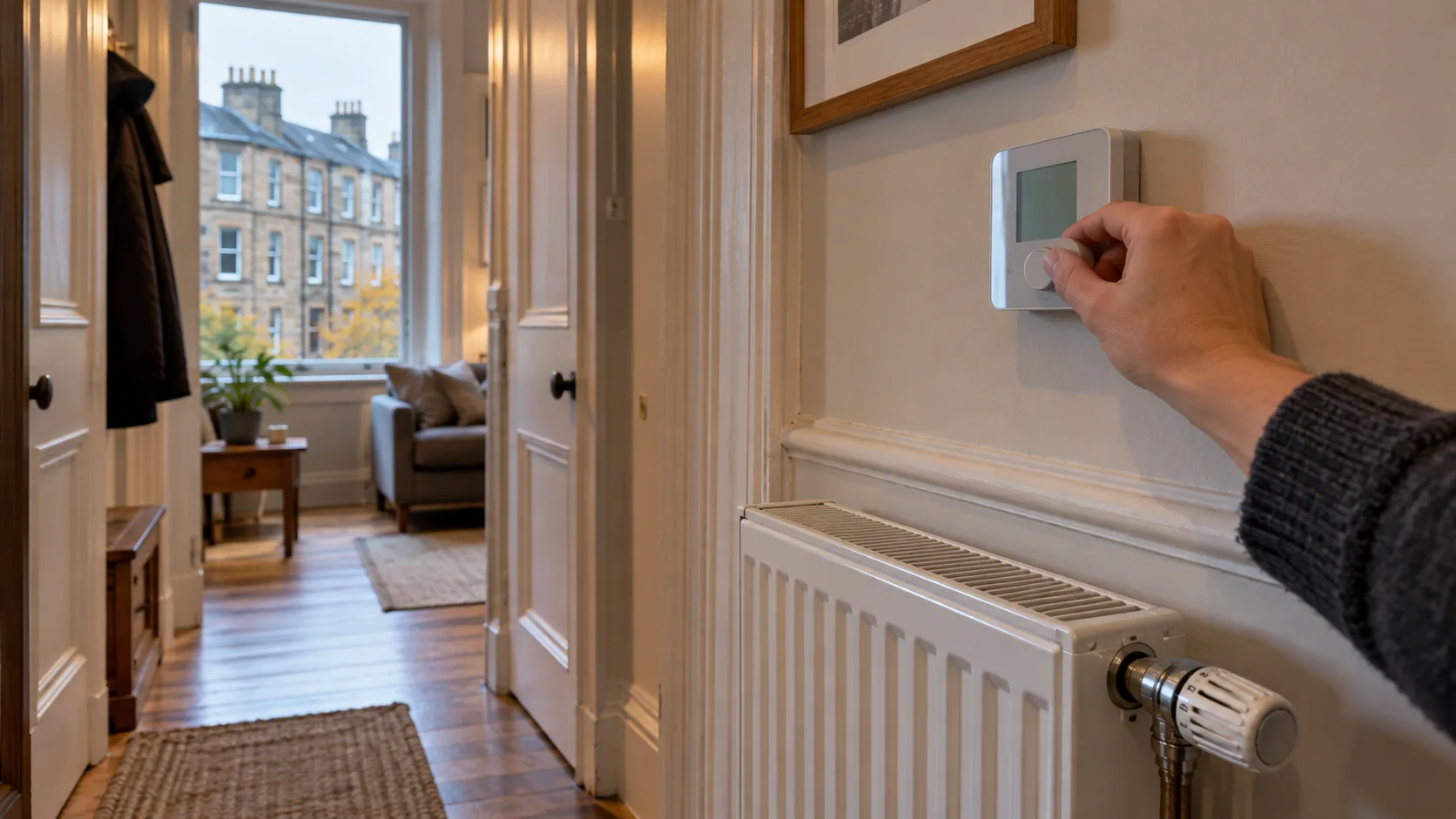
Whichever approach you take, good controls make the biggest difference. Many older homes in Johnstone and Elderslie still have a basic dial thermostat and a mechanical timer, and a few simple changes can help:
- Set the thermostat to a comfortable temperature and leave it there, rather than turning it up to heat the house faster. Many people find 18 to 21°C comfortable.
- Bring the heating on a little before you need it and let it switch off a little before you go out or go to bed.
- Use thermostatic radiator valves to keep spare rooms cooler, but don’t turn them fully off.
- Use frost protection if you go away, rather than switching off completely.
Heating homes across Renfrewshire
Renfrewshire has a real mix of homes, from older sandstone tenements and terraces to newer estates around Erskine and Renfrew. Older flats with solid walls tend to cool quickly and can be more prone to condensation, while newer homes hold heat for longer. If you’re not sure what suits your home, we’re happy to look at your system and controls. We also cover homes in Renfrew and Erskine.
Frequently asked questions
Is it cheaper to leave the heating on low all day?
For most homes with a gas boiler, no. Heating the house when you need it, using a timer and thermostat, usually uses less gas than running it on low all day. Very well insulated homes and heat pumps can be exceptions, as they suit longer, steadier running.
What temperature should I set my thermostat to?
Many people are comfortable somewhere between 18 and 21°C. Start at the lower end and turn it up a degree at a time until it feels right. Households with elderly or vulnerable people may need it warmer, so set it to suit the people living there.
Does turning the thermostat up heat the house faster?
No. The boiler heats the house at the same rate whatever the thermostat says. Turning it up just means the boiler keeps running until it reaches the higher temperature, which uses more gas. Set it to the temperature you want and leave it.
Can leaving the heating off cause damp?
It can. Rooms that get very cold are more prone to condensation, which can lead to damp and mould. Keeping some background heat in cold rooms and ventilating kitchens and bathrooms helps. Turning radiator valves down low, rather than fully off, is a sensible middle ground.
Want your heating set up properly?
If you’d like help getting your heating and controls set up to suit your home, give us a call on 07715 980674 or drop us a message and we’ll talk you through the options.